


Every two years, the news cycle goes into hyperdrive with either midterm or general election anxiety. Headlines flash about potential shifts in policy and personnel and what that means for your wallet and portfolio. This familiar cocktail of headlines has been a consistent driver of volatility in the months leading up to midterm elections as the market begins to digest the “what-ifs."
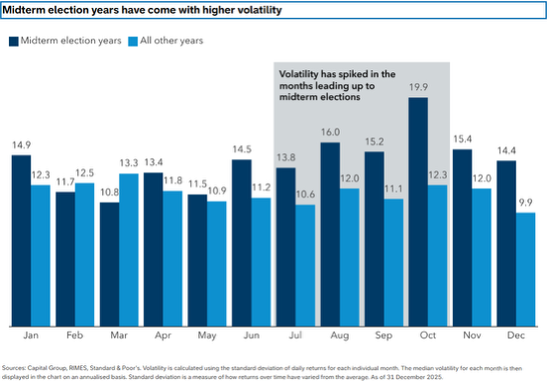
The good news is that despite the volatility leading up to the midterm results, the periods that follow have historically delivered outsized returns relative to other years.
Going back to 1950, the S&P 500 has posted positive returns in every 12-month period following a midterm election cycle. In addition to that win rate, those 12-month periods have also delivered an average return of ~15%, which vastly outperforms the average return of all other years.
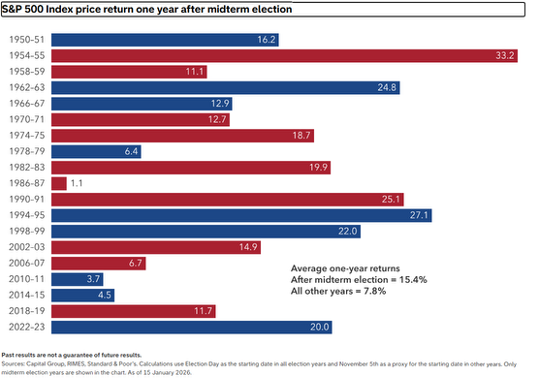
What are potential causes of this pattern?
- Removal of Overhang: Speculation of forward policy ends allowing investors to begin mapping out the political and regulatory environment for the next 2 years.
- Comfort in Gridlock: Markets generally favor gridlock in D.C. because it prevents any sort of sweeping legislative changes that may upend their investment approach.
Ultimately, while politics can influence markets, long-term economic fundamentals and corporate earnings matter more. Pre-midterm volatility may feel unsettling, but history suggests that allowing election anxiety to guide portfolio decisions is a losing strategy.
If you are uncertain about your current portfolio positioning or would like us to review your overall financial strategy, please reach out to us! You may schedule a review with one of our advisors here: https://www.vlpfa.com/schedule-a-meeting
Past performance is not indicative of future results. Indexes are unmanaged and cannot be invested in directly. Historical market performance surrounding prior midterm elections is provided for illustrative purposes and should not be considered indicative of how markets will perform during future election cycles.